
The Rise and Fall of the Scythian Empire's Monetary System: Lessons for Today
EDUCATION ON GOLD & SILVER
Introduction to the Scythian Empire and Its Economy
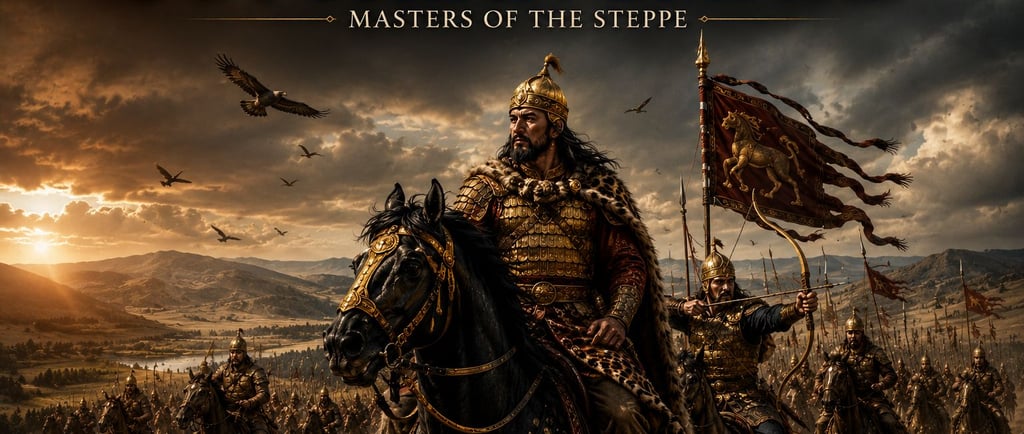
The Scythian Empire, which thrived around 900 BC to 200 BC, was a coalition of nomadic tribes primarily located in the vast steppe regions of present-day Ukraine, Russia, and Central Asia. They played a pivotal role in the ancient world, influencing various cultures, notably those of the Greeks and Persians. The economy of the Scythians was intricately tied to their nomadic lifestyle, allowing them to adapt and flourish in a challenging environment.
One key factor contributing to the rise of the Scythian Empire was their unparalleled mobility. As nomads, Scythians moved in search of fresh pastures for their livestock, which was the backbone of their economy. This lifestyle not only allowed them to avoid overpopulation and resource depletion but also facilitated direct access to trade routes connecting Europe and Asia. Their swift movements across vast territories enabled them to engage in trade, forging beneficial relationships with settled civilizations.
The Scythian economy was marked by a focus on livestock herding, which led to the production of surplus goods. They raised horses, cattle, sheep, and goats, embodying a culture where animal husbandry played a central role. In addition, their raids on neighboring regions contributed to their wealth and fueled trade endeavors. The rich material culture of the Scythians, characterized by intricate metalwork and artistic expression, emerged from these interactions.
The Scythians established a network of exchange with agricultural societies, notably the Greeks and Persians. They traded not only goods but also ideas, enhancing cultural exchanges. These interactions illustrated the significance of mobility in their economy, ultimately showcasing how the Scythian monetary system evolved alongside social dynamics and geopolitical factors. Understanding the Scythian Empire's economic strategies offers valuable insights into the complexities of trade and the advantages of a nomadic lifestyle in a historical context.
Key Dates and Influential Leaders in the Scythian Monetary System
The Scythian Empire, which thrived from approximately 900 BC to 200 BC, established a unique monetary system that was integral to its economy and influence across ancient Eurasia. One of the early milestones came around 700 BC, when the Scythians began using gold and silver as a medium of exchange. This development was crucial as it not only facilitated trade but also positioned the Scythians as key players in regional commerce.
A significant leader during this period was King Scyles, who ruled in the 4th century BC. His diplomatic skills allowed for the establishment of trade agreements with neighboring cultures, such as the Greeks and Persians, which were instrumental in the introduction of coinage influenced by these civilizations. The adoption of foreign coins and the eventual minting of Scythian currency established a more standardized economy, reinforcing the importance of precious metals in trade.
The Scythians were known for their nomadic lifestyle, which affected the evolution of their monetary practices. For example, by 400 BC, Scythian tribes began to accept not just metal currency but also goods and services as barter, demonstrating an adaptive monetary system. At this juncture, the use of decorated gold and silver ornaments as wealth indicators became prevalent, showcasing the value placed on artistic craftsmanship in their economy.
As the Scythian Empire entered its decline in the 3rd century BC, the influence of their monetary system shifted. Notable leaders such as Athea, who championed trade routes across the Silk Road, attempted to sustain the Empire’s economic vitality, despite facing pressure from external forces like the Macedonians. Their eventual fall saw a transition in the monetary system of the region, but the foundations laid by the Scythians had lasting impacts on future economies.
The Use of Precious Metals and Proto Currency
The Scythians, an influential group of nomadic peoples, skillfully utilized gold and silver as not only ornamental materials but also integral components of their trade systems. The use of precious metals extended beyond mere decoration in jewelry and weaponry to encompass a rudimentary form of currency, which facilitated trade across vast networks. This financial system was uniquely tailored to the nomadic lifestyle of the Scythians, as they often encountered various cultures, including the Greeks and Persians, necessitating an adaptable method of exchange.
In the absence of standardized currency, the Scythians engaged in a sophisticated form of bartering, employing precious metals in different forms, such as weights and standardized nuggets. Their reliance on metallic weights as an early proto currency illustrates the ingenious ways in which they adapted to their circumstances. One notable aspect of their monetary system was the use of arrowhead-shaped pieces of metal, which served as proto currency. These arrowheads not only had practical uses but also held significant value in trade, indicating the intricate relationship between utility and currency in Scythian culture.
The significance of precious metals in the Scythian society extended beyond economic transactions; it also served as a representation of their values and social structures. The high status associated with gold and silver reflected the Scythians' achievements and facilitated power dynamics both within their tribes and in relations with other civilizations. The adoption of arrowhead proto currency demonstrated a cultural depth, as the design implied skill and artistry, embedding cultural pride into their economic practices.
Moreover, the interaction with Greeks and Persians through trade underscores the evolving nature of their monetary system. Such transactions contributed to the diffusion of cultural practices and the adoption of different economic models, highlighting the Scythians' position in the broader context of ancient trade networks.
Lessons from the Scythian Monetary System for Modern Economies
The Scythian Empire, known for its intricate social structures and trade networks, also had a distinct approach to its monetary system. One of the key lessons modern economies can extract from the Scythian monetary framework is the inherent value attributed to precious metals like gold and silver. Unlike contemporary monetary systems that predominantly rely on fiat currency or digital forms of money, Scythian society emphasized materials that held intrinsic value, making them a more stable medium of exchange.
In the present context, where fiat currencies can fluctuate wildly based on governmental policies, the Scythian model underscores the importance of recognizing the foundational worth of tangible assets. Precious metals have historically demonstrated their ability to endure economic turbulence, serving as a hedge against inflation and currency devaluation. This perspective advocates for a reinvigorated interest in commodities as a form of currency, presenting a compelling case for incorporating gold and silver into modern financial systems alongside traditional currency.
Moreover, the Scythian approach to trade—largely facilitated by its backing of precious metals—highlights essential lessons in economic sustainability. For today’s economies, fostering a system that prioritizes the real value of wealth can lead to enhanced trust among traders and consumers. The contemporary financial environment could benefit from the reassessment of value retention mechanisms, ensuring that investments are not just numerical figures in bank accounts, but rather grounded in dependable assets.
Ultimately, the transition towards recognizing intrinsic value, as demonstrated by the Scythian Empire, could guide modern economies toward more resilient financial practices. By learning from the past, contemporary societies have the opportunity to construct more stable and trustworthy monetary systems that withstand the tests of time and market fluctuations.