
The Rise and Fall of the Buyid Dynasty's Monetary System: A Historical Analysis
EDUCATION ON GOLD & SILVER
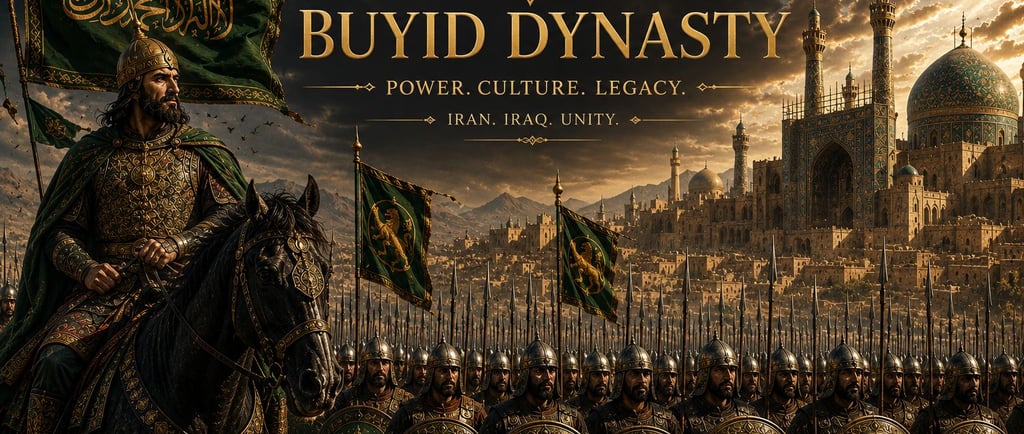

Introduction to the Buyid Dynasty and Its Economic Landscape
The Buyid Dynasty emerged as a prominent political entity in the 10th century, particularly impacting the regions of Persia and Iraq. Established in 934 AD, the dynasty characterized itself through a combination of military prowess and cultural patronage, making significant contributions to the historical tapestry of the Persian Empire. The Buyids' rule coincided with a pivotal era in Islamic history when regional powers were vying for influence amidst a backdrop of fragmentation following the decline of the Abbasid Caliphate.
The economic landscape during the Buyid Dynasty was marked by its strategic control over key trade routes that connected the East and West. Their governance facilitated a milieu for commerce that fostered prosperity and growth. A notable aspect of this period was the introduction and early utilization of an effective monetary system rooted in the use of gold and silver coins, which became foundational to the Buyid economy. This monetary innovation allowed for improved trade relationships with neighboring regions, expanding their influence and accessibility to resources.
Monetary dynamics in the Buyid era were influenced not only by political stability but also by the complex social fabric of the time. Merchants played a vital role as intermediaries in trade, boosting the economy through the exchange of goods such as silk, spices, and precious metals. The complexities of the Buyid monetary system revealed a sophisticated understanding of economic principles, diverging from practices in earlier periods. As the dynasty navigated through periods of both prosperity and strife, its approach to monetary policy adapted, reflecting the broader economic challenges faced by the region.
This section sets the stage for exploring how the Buyid monetary system evolved and ultimately contributed to the dynasty's rise, alongside the factors that precipitated its decline, establishing a historical context that is both intricate and impactful.
Key Figures and Events Impacting the Buyid Monetary System
The Buyid Dynasty, which arose in the 10th century, significantly influenced the Islamic monetary system through its established leadership and administrative structure. Central to this was the co-founder, Ali ibn Buya, whose reign commenced around 934 AD. Ali's leadership was pivotal in shaping the early economic policies that would affect trade, taxation, and currency minting practices. Under his authority, the Buyids sought to centralize power and standardize coinage, thereby enhancing economic stability.
Another essential figure was Imad al-Dawla, one of the most notable Buyid rulers during the late 10th century. His tenure was marked by extensive military campaigns and prosperity, leading to a reinforced economy that facilitated trade across the Persian Gulf and beyond. Imad al-Dawla's support for urban centers and marketplaces allowed for a thriving commerce environment, which in turn required a flexible and robust monetary system to support escalating transactions and trade complexity.
The role of regional governors also cannot be understated. Governors, or Walis, were tasked with implementing the central government's monetary policies in the provinces. The economic realities varied widely across regions, leading to unique adaptations of Buyid monetary policy that reflected local needs. This adaptation sometimes caused friction between central authority and regional practices, prompting changes in currency types or taxation methods.
Throughout the Buyid Dynasty from 934 to 1062 AD, significant events including invasions, political upheavals, and shifts in trade routes greatly affected the monetary system. The impact of the Seljuk Turks’ rise, for instance, created a power struggle that strained the existing monetary practices. These shifts, along with internal strife and external pressures, continually shaped the evolution of the Buyid monetary framework, reflecting an interplay between leaders’ decisions and wider historical trends.
The Gold Dinar and Silver Dirham: Instruments of Trade and Wealth
The Buyid Dynasty, which flourished between the 10th and 11th centuries, relied heavily on its monetary system, particularly the gold dinar and silver dirham, as instruments of trade and wealth. The gold dinar, known for its intrinsic value and attractiveness, played a crucial role in facilitating trade both within the Buyid realm and beyond. Minted from high-quality gold, these coins provided a reliable medium of exchange that boosted economic interactions among merchants in different regions.
Similarly, the silver dirham served as the backbone of everyday transactions. The minting process of both coins was highly regulated, ensuring consistent weight and purity, which instilled confidence among traders and consumers alike. The large-scale production of these coins enabled the Buyid economy to thrive, as they were widely accepted in a variety of markets, thus integrating diverse populations into a burgeoning trade network.
The significance of the gold dinar and silver dirham extended beyond mere currency; they were tangible representations of wealth and status. Wealth distribution within Buyid society was directly influenced by the possession of these coins. Nobility and affluent merchants who controlled substantial quantities were often seen as economic powerhouses. Consequently, this led to a stratified society where access to and accumulation of these currencies could determine personal and familial fortunes.
Moreover, the adoption of the dinar and dirham by neighboring regions further exemplified their importance. The Buyids engaged in extensive international commerce, the flow of which was heavily reliant on these currencies. Their ability to facilitate trade, not just regionally but also across borders, promoted economic stability and growth, solidifying the Buyid Dynasty's influence in the region. These monetized instruments not only served practical purposes but also played a pivotal role in the cultural and economic exchanges that characterized this era.
Lessons from the Buyid Monetary System: Precious Metals vs. Fiat Currencies
The Buyid Dynasty, which ruled parts of present-day Iran and Iraq from the 10th to the 11th centuries, provides critical insights into the evolution of monetary systems—particularly the contrast between precious metals and fiat currencies. The Buyids extensively utilized gold and silver coins, which were not only a means of transaction but also a store of value. This reliance on tangible assets offered stability and trust in a fluctuating economic landscape, reinforcing the idea that economies backed by precious metals can provide more certainty than their fiat counterparts. In modern contexts, fiat currency systems, while allowing for flexibility and quick adjustments, face challenges related to inflation, currency devaluation, and loss of public confidence.
Moreover, the transition from a gold and silver-based economy to a fiat system raises questions about the principles underpinning currency valuation. During the Buyid period, the uniformity and long-term acceptance of coinage underscored the advantages of precious metals in establishing credibility. Today's fiat currencies, by contrast, lack intrinsic value and depend heavily on government backing and public trust. This creates vulnerabilities, as seen in the inflationary spirals faced by numerous economies, which may prompt a reevaluation of historical practices.
It is essential for contemporary economic policymakers to analyze the lessons gleaned from the Buyid monetary practices. By understanding the historical role of precious metals in trade and monetary stability, modern economies can better appreciate the significance of diversifying their currency systems. While the complete return to a gold standard may not be feasible, integrating the lessons of the past might lead to more sustainable and resilient financial structures in the future. Reassessing the value of historical monetary systems could significantly shape the evolution of our modern economic policies.