
The Rise and Fall of the Qajar Empire's Monetary System: A Historical Analysis
EDUCATION ON GOLD & SILVER
Introduction to the Qajar Empire and Its Monetary System
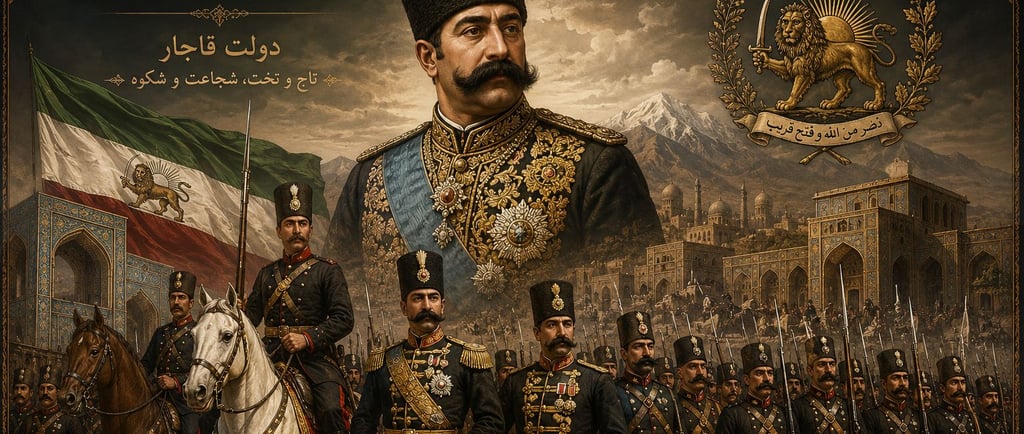
The Qajar Empire, which emerged in 1789, represented a significant chapter in Iranian history. This dynasty arose amid the political fragmentation following the decline of the Safavid dynasty and the influx of foreign influence. Geographically, the empire encompassed present-day Iran and extended into parts of the Caucasus and Central Asia. The Qajar rulers aimed to consolidate power over diverse cultures and peoples, which contributed to the rich tapestry of Iranian heritage during this period.
Culturally, the Qajar period is marked by advancements in art, architecture, and literature, reflecting the dynastic aspiration to restore Iran’s historical glory. However, the economic structure of the Qajar Empire was a fundamental aspect that required attention. Agriculture formed the backbone of the economy, with various regions producing different crops, contributing to both local sustenance and trade. The bustling bazaars served not only as commercial centers but also as nodes of political and social interaction, ensuring the flow of goods and ideas.
Central to the economic framework was the monetary system that relied heavily on precious metals, particularly gold and silver. Coins produced from these materials enjoyed a dual role; they facilitated trade within the empire and served as a means of exchange with foreign entities. The Qajars issued numerous types of currency, which helped to standardize transactions and provide a semblance of economic stability in an otherwise volatile political landscape. This reliance on precious metals also influenced social dynamics, as wealth accumulation through trade and land ownership shaped class structures.
The intricate interplay between the Qajar monetary system and its broader economic context set the foundation for the subsequent challenges faced by the empire. Recognizing the importance of gold and silver in fostering trade and social hierarchy can aid in understanding the impending transitions that would eventually define the fate of the Qajar dynasty.
Key Dates and Leaders Influencing the Monetary System (1789-1925)
The Qajar Empire's monetary system experienced profound changes between 1789 and 1925, marked by critical leaders and pivotal events that shaped economic practices in Iran. One of the earliest significant dates was 1797, the year when Fath Ali Shah ascended the throne. His reign brought about substantial economic reforms aimed at stabilizing the nation’s currency. Under his leadership, the **toman** was introduced as a new unit of currency, which replaced various forms of local currencies. This change reflected a strategic move to unify the monetary system of the empire.
Following closely, the period from 1848 to 1896 witnessed the reign of Nasir al-Din Shah, another vital figure in the evolution of the monetary system. Nasir al-Din Shah implemented further monetary reforms that aimed to modernize the currency and improve the fiscal policies. The introduction of coinage specifically designed for international trade marked a significant shift during this time, aiming to help Iran engage more effectively in global markets.
However, the era was not without crises. The economic landscape suffered dramatically due to the increasing influence of foreign powers and internal corruption. The late 19th century saw the collapse of the kolah system, which was a traditional form of currency exchange, prompting calls for modernization and stability. Additionally, the establishment of the first modern bank in Iran in 1889, the Imperial Bank of Persia, indicated a crucial transition towards a more structured banking system.
The monetary system continued to evolve, particularly in the early 20th century, with major political and social upheavals, including the Constitutional Revolution of 1905-1911. These events influenced monetary policies significantly, fostering demand for a more equitable economic system that would ultimately lead to a crisis in the currency by the 1920s, reflecting the broader political dynamics and societal shifts during this transformative era.
Currency Types: Gold Toman, Silver Qiran and Shahi, and Copper Fulus
During the Qajar Empire, which thrived from the late 18th century to the early 20th century, various forms of currency were utilized, reflecting the empire's economic complexities and its engagement in trade. The most notable currencies were the gold toman, silver qiran, and shahi, along with copper fulus. Each of these currencies had distinct characteristics and implications for the economy.
The gold toman was regarded as the most prestigious currency, primarily due to its intrinsic value derived from the metal itself. It was minted with strict standards to assure its weight and purity, a practice that reinforced trust in its value. The toman was widely accepted for larger transactions, making it integral to both domestic trade and international dealings. In contrast, the silver qiran and shahi were of lesser value and typically used for smaller transactions. The qiran, often subdivided further into pieces, provided a more granular trading option for the everyday populace.
Copper fulus represented an even lower denomination that catered to the lower economic strata, allowing for transactions in mundane daily activities. The minting of these coins was less elaborate than that of gold or silver, and they were used primarily within localized markets. The use of copper also illustrated the economic stratification in society, where different classes participated in the economy in varying ways.
While these historical currencies were precious metals whose values could fluctuate based on market demands and mining outputs, they stand in stark contrast to today’s fiat monetary system, in which currency is not backed by physical commodities. This evolution towards a fiat system marks a fundamental shift in economic principles, reflecting changing perceptions and behaviors regarding trust, value, and trade within societies.
Lessons from the Qajar Empire's Monetary History
The monetary history of the Qajar Empire offers insightful lessons for contemporary economies, particularly in the context of currency valuation and trust. During its peak, the Qajar rulers favored precious metals, such as gold and silver, viewing them as 'real money.' This preference underscored the importance of intrinsic value in currency, a concept that seems increasingly relevant today as nations navigate the complexities of fiat money systems. In contrast to the metallic standards upheld by the Qajars, modern economies predominantly rely on paper currency and digital transactions, which are supported largely by government guarantees rather than inherently tangible assets.
The reliance on fiat currencies has brought forth several challenges, including economic instability and inflationary pressures. The Qajar experience demonstrates how monetary systems based on assets with intrinsic value can contribute to economic resilience. The perception of currency value among the populace was closely tied to the actual resources backing it, fostering greater public trust in the monetary system. If modern economies could integrate certain elements from the Qajar approach, such as store-of-value concepts, they might achieve more stability and confidence in times of economic uncertainty.
Furthermore, the fall of the Qajar Empire highlights the repercussions of a deteriorating monetary system when public trust is compromised. This serves as a crucial reminder for today's financial policymakers to maintain transparency and accountability. Understanding the rise and fall of the Qajar monetary system not only provides historical context but can also stimulate dialogue on revising our current monetary practices. Investment strategies might benefit from this historical perspective, as they can encourage diversification into tangible assets, echoing the Qajar preference for precious metals. Such lessons could potentially guide economies toward more sound financial foundations.