
The Rise and Fall of the Third Dynasty of Ur's Monetary System: Lessons from an Ancient Economy
EDUCATION ON GOLD & SILVER
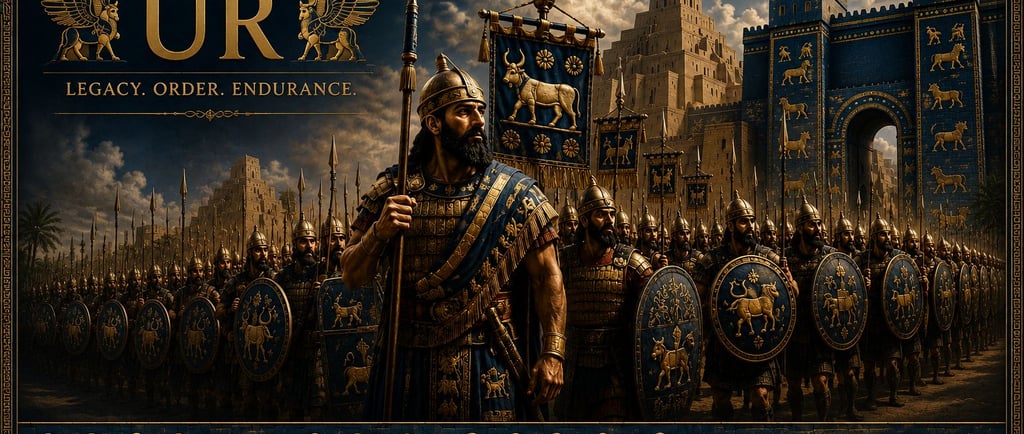
Key Historical Context and Timeline (2112 BC - 2004 BC)
The Third Dynasty of Ur, often regarded as a significant period in ancient Mesopotamian history, emerged around 2112 BC under the leadership of King Ur-Nammu. This dynasty followed the tumultuous period known as the Gutian rule, characterized by instability and social strife. Ur-Nammu, recognized for his reformative measures, aimed to restore order and enhance the well-being of his subjects through a centralized administration. His approach led to the development of one of the earliest codified legal systems, which had lasting implications for economic transactions and societal norms.
During his reign, Ur-Nammu implemented a series of economic policies that emphasized agricultural productivity and resource management. His efforts not only positioned Ur as a political power but also established a framework for a stable monetary system, which was pivotal for trade and commerce across Mesopotamia. The extensive construction projects, such as the ziggurat in Ur, reflected this advanced administration's ambition to demonstrate both religious devotion and economic capability.
The power of the Third Dynasty was sustained through a line of successors, including Shulgi, who ruled for nearly 48 years, further expanding the economic reforms initiated by Ur-Nammu. Shulgi continued to enhance the administration and promote cultural advancements, leading to an unprecedented level of urban development and trade prosperity. However, this peak of the dynasty was met with challenges in the later years. The subsequent rulers faced mounting pressures from external forces, including invasions and internal dissent, contributing to a gradual decline.
The timeline of the Third Dynasty of Ur illustrates a remarkable but ultimately fragile economic structure that, despite its advancements, was susceptible to the complex dynamics of power and resource distribution. By 2004 BC, the dynasty would officially collapse, marking the end of an era that offered significant lessons on the intricacies of governance, economic stability, and societal resilience.
Influential Leaders and Their Economic Policies
The Third Dynasty of Ur, which emerged around 2100 BCE, played a pivotal role in the development of a sophisticated monetary system within Mesopotamia. Central to this transformation were influential leaders such as Ur-Nammu and his successor Shulgi, both of whom introduced significant economic reforms that had lasting implications for trade and commerce. Ur-Nammu is lauded for establishing the first code of laws in history, which not only addressed administrative matters but also economic activity. His initiatives laid the groundwork for a more structured and reliable economic framework in the region.
One of the hallmark policies of Ur-Nammu was the introduction of standard weights and measures. This reform was critical as it ensured fairness in trade by eliminating discrepancies and promoting trust among merchants and traders. Standardization reduced conflicts over pricing and quality, thus facilitating smoother and more efficient transactions which, in turn, stimulated economic growth and prosperity. This accountable system attracted trade from neighboring regions, solidifying Ur’s position as a commercial hub.
Following Ur-Nammu, Shulgi continued and expanded upon these foundational reforms. Under his rule, the monetary system saw further advancements, notably in the realm of taxation. Shulgi implemented measures that resulted in a more comprehensive taxation system, which not only increased state revenues but also ensured that the wealth generated was reinvested into public works and infrastructure. This focus on economic innovation and state funding for infrastructure projects, such as temples and irrigation systems, resonated deeply with the populace, bolstering social stability and economic resilience.
The economic policies of Ur-Nammu and Shulgi had profound implications not just within the city of Ur, but also across the surrounding regions. Their commitment to a robust and equitable monetary system helped foster an environment of growth, cooperation, and cultural exchange which characterized the Third Dynasty of Ur as a significant period in ancient history.
Monetary System: Gold, Silver, and Weights
The monetary system of the Third Dynasty of Ur was profoundly influenced by the use of gold and silver as mediums of exchange. Precious metals served not only as currency but also as symbols of wealth and power within the society. Gold and silver coins were minted, enabling a standardized measure of value, which facilitated trade across various regions. These metals were highly valued due to their rarity and intrinsic properties, making them a viable means of engaging in economic transactions.
Central to the operation of this system was the weight standardization that underpinned the valuation of goods and services. Two prominent units of measure emerged: the shekel, weighing approximately 8.4 grams, and the mina, equating to about 500 grams. The shekel was often used for smaller transactions or personal items, while the mina represented larger sums, typically in the context of significant trade agreements or state treasury dealings. This system allowed for a structured approach to commerce, as weights were critical in ensuring fairness and transparency in exchanges.
The cultural significance of gold and silver cannot be overstated. In ancient Mesopotamia, precious metals were associated with divine favor and prosperity. The value placed on these metals transcended their economic utility; they were also incorporated into religious practices and royal iconography, enhancing their reverence within the society. Unlike modern monetary systems, which are predicated largely on fiat currency devoid of intrinsic value, the societal perceptions of gold and silver during the Third Dynasty of Ur imbued these materials with multifaceted meanings, encompassing economic, spiritual, and cultural dimensions.
Lessons Learned: Value of Precious Metals vs. Modern Fiat Currencies
The Third Dynasty of Ur serves as a vital point of reference for understanding the distinctions between precious metals and contemporary fiat currencies. During its reign, the economy thrived on the intrinsic value of gold and silver. These precious metals were not merely forms of currency but also signified tangible wealth, facilitating trade and instilling a sense of stability. In contrast, modern fiat currencies, which derive their value from government decree rather than intrinsic worth, can lead to volatility, inflation, and a disconnect between currency value and physical assets.
One notable lesson from the era of the Third Dynasty is the role of intrinsic value. Precious metals have historically maintained a stable appeal due to their scarcity, durability, and widespread acceptance. This contrasts sharply with fiat systems that can fluctuate wildly in value due to political instability, economic mismanagement, or loss of public trust. The reliance on tangible assets like gold and silver may offer insights for crafting future monetary policies, particularly in times of economic uncertainty.
Additionally, the ancient monetary system exemplifies the importance of security and trustworthiness in a currency. Citizens of the Third Dynasty experienced a relatively stable economic environment, which facilitated trade and fostered confidence in their monetary system. Modern economies might benefit from reinforcing faith in their currencies by adopting mechanisms that ensure stability and protect against inflation or economic shocks. By comparing the lessons from the ancient practices of the Third Dynasty of Ur with today's reliance on fiat currency, we can appreciate the potential advantages of reconsidering a balance between tangible assets and the evolution of money.