
The Rise and Fall of the Haitian Empire's Monetary System: Lessons for Modern Investors
EDUCATION ON GOLD & SILVER

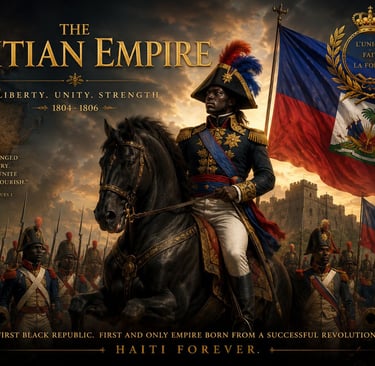
Introduction to the Haitian Empire and Its Monetary System
The Haitian Empire emerged in the early 19th century, following its independence from French colonial rule in 1804. This momentous event marked a significant turning point not only in Haiti's history but also in the context of global colonialism, as Haiti became the first nation to abolish slavery and establish a republic run by former slaves. The political and social upheaval of this time significantly influenced the newly formed state’s monetary system, which was critical for its functioning and sustainability.
In the immediate years after independence, Haiti utilized the French livre, a currency that reflected its colonial past. The reliance on this foreign monetary system underscored the challenges faced by the nascent Haitian government, which yearned to establish its own economic identity. The necessity of creating a stable, national currency became evident as aspirations for economic independence grew stronger among the Haitian populace.
By 1813, the Haitian gourde was introduced as the official currency. The choice of the gourde was a pivotal decision aimed at fostering national pride and economic autonomy. This new currency sought to reflect the values and identity of the Haitian people, distancing itself from colonial influences. Its establishment was not merely a technical change; it represented a broader socio-political transformation reflecting the will of a nation striving to assert itself on the world stage.
The conditions surrounding the introduction of the gourde were complex and fraught with challenges. The instability resulting from both internal political strife and external pressures significantly hampered the effective implementation of this monetary system. Nevertheless, the Haitian gourde remained a symbol of national resilience and independence, providing an important case study for future monetary systems in the region and illuminating lessons relevant for modern investors and policymakers.
Key Dates and Events that Shaped the Economy from 1804 to 1806 and 1849 to 1859
The period between 1804 and 1806 marked a significant transformation in Haiti's economy, influenced heavily by its newfound independence. After declaring independence from France in 1804, Haiti faced immediate challenges, particularly the lack of a stable monetary system. In 1806, the decision to abandon the French colonial currency contributed to economic instability. The reliance on foreign currencies, including the Spanish real and the French livre, highlighted the absence of a robust local currency, ultimately leading to hyperinflation as the government attempted to stabilize the economy.
In the aftermath of the Haitian Revolution, political instability overshadowed various initiatives aimed at economic development. The assassination of Jean-Jacques Dessalines in 1806 further exacerbated the already fragile political climate, leading to a divide between the north and south of Haiti. This fragmentation hindered unified monetary policies, delaying the establishment of a national currency essential for economic cohesion. As competing factions vied for control, the economy suffered, marked by rampant inflation and increased reliance on barter as people lost faith in the currency system.
Fast forward to the period between 1849 and 1859; economic challenges persisted, compounded by political upheaval and external pressures. The introduction of the 'Haitian Gourde' in 1813 had its effects, but it wasn't until 1849 that formal attempts to reinforce its use as the national currency were made. The enduring legacy of colonialism saw various administrations attempting reforms to stabilize the economy. However, their efforts were often undermined by political volatility, international isolation, and the debt imposed by France, which stifled growth.
The cumulative impact of these events created an environment of uncertainty, revealing lessons about the importance of stable governance and credible monetary systems. The journey of Haiti's economy during these formative years ultimately illustrates the intricate relationship between political stability and economic prosperity.
Influential Leaders and Their Impact on Haiti's Economy
The trajectory of Haiti's monetary system has been shaped significantly by its leaders, particularly during the early years following independence. One of the most pivotal figures was Jean-Jacques Dessalines, the first ruler of independent Haiti. Upon declaring independence from French colonial rule in 1804, Dessalines implemented various economic policies aimed at stabilizing the young nation. His leadership style was characterized by a strong emphasis on land reform, which was essential in redistributing property among the formerly enslaved population. Dessalines believed that agricultural productivity was crucial for economic recovery and sought to promote self-sufficiency. However, his policies also led to significant internal strife, and the approach to land ownership would later create economic challenges.
Following Dessalines' assassination in 1806, Haiti experienced a period of instability with a succession of leaders, including Henri Christophe and Alexandre Pétion. Christophe established a kingdom in the north and created a centralized economic system, attempting to bolster industry and agricultural exports. Conversely, Pétion in the south adopted more liberal policies, advocating for trade and private enterprise. This division in leadership and economic philosophy set the foundation for discrepancies in economic growth and development across the country, highlighting how leadership styles directly influenced the overall economic status.
As Haiti progressed through the subsequent decades, the evolving economic strategies of these leaders continued to influence the nation's interaction with international powers. The decisions made by leaders during this period not only impacted Haiti's internal monetary policies but also affected foreign relations, particularly in terms of trade agreements and reparations demanded by France. By examining the decisions of these influential figures up to the 1850s, we gain valuable insight into the complexities of Haiti's monetary system and the lasting effects of their leadership on the economy.
Lessons from Haiti's Monetary History for Modern Investors
The monetary history of the Haitian Empire offers invaluable lessons for contemporary investors, particularly in understanding the dynamics of tangible assets such as precious metals compared to fiat currency. During its peak, the Haitian Empire utilized coins made of gold, silver, and copper, embodying an inherent and stable value. This historic reliance on tangible assets is particularly relevant today, as many investors grapple with uncertainties in their portfolios amidst fluctuating fiat currencies.
Modern investment strategies often advocate for diversification, emphasizing the importance of holding both traditional fiat assets and alternative investments. The experience of Haiti suggests that tangible assets, such as gold and silver, can serve as a hedge against economic instability. These precious metals have historically retained their value, even when fiat currencies undergo devaluation or inflationary pressures. Consequently, investors may consider allocating a portion of their portfolios to metals, viewing them as a form of insurance during turbulent economic times.
The lesson drawn from Haiti’s coinage system underscores the significance of intrinsic value in investment choices. Unlike fiat currency, which derives its value from government regulation and public trust, metals carry inherent worth based on their scarcity and utility. This characteristic makes them particularly appealing during periods of economic uncertainty when confidence in traditional financial systems can wane.
Furthermore, the Haitian Empire's past illustrates the need for adaptability in monetary policy. Investors should remain vigilant and adaptable, learning from historical patterns to make informed decisions regarding asset allocation. As the economy evolves, so too should strategies that leverage both tangible assets and the potential benefits of emerging financial trends. In light of these insights, modern investors are encouraged to reflect on past monetary practices, integrating these lessons into their investment philosophies.