
The Rise and Fall of the Urartu Empire's Monetary System: Lessons from Ancient Wealth
EDUCATION ON GOLD & SILVER
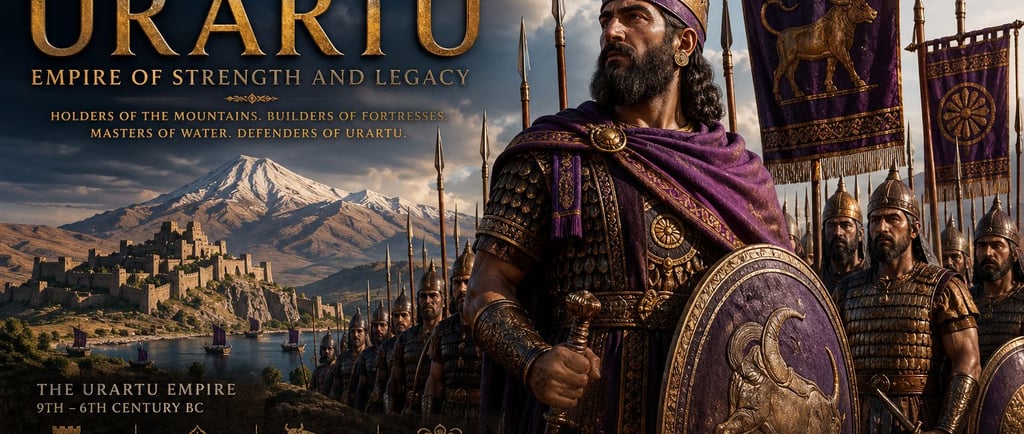
Overview of the Urartu Empire and Its Monetary System
The Urartu Empire, flourishing between 860 BC and 590 BC, was a significant entity in the ancient Near East, located in the highlands of what is now eastern Turkey, Armenia, and northwestern Iran. This period is marked by the empire's remarkable achievements in metallurgy, agriculture, and urban development, establishing it as a formidable power. The Urartians were known for their advanced fortresses, intricate pottery, and distinctive cuneiform inscriptions, which highlighted their administrative capabilities and culture.
At the core of the Urartian economy was a sophisticated monetary system that utilized various metals such as gold, silver, copper, bronze, and even Iron. This metal-based currency facilitated trade, both locally and with neighboring regions. The use of these precious metals allowed for a standardized medium of exchange, streamlining the process of commerce. Additionally, goods were often traded based on weight, reflecting a highly organized economic structure governed by principles of fairness and transparency.
The Urartians developed comprehensive trading practices that included establishing market centers and trade routes. Key economic hubs emerged during this time, fostering exchange not only within the empire but also with neighboring civilizations, such as Assyria and Persia. The 8th and 7th centuries BC witnessed the growth of these networks, with significant milestones in trade regulations and taxation, which played a crucial role in sustaining the empire's prosperity.
Critical to the understanding of Urartian wealth is the establishment of state-controlled workshops that produced metal goods, which contributed to the monetary system directly. This systemic approach ensured a steady supply of currency, reinforcing the empire's economic stability. The intertwining of their agricultural yields and metal production not only fortified the empire’s wealth but also set the foundation for various socio-political structures that thrived concurrently.
Key Leaders and Economic Influences
The Urartu Empire, flourishing between the 9th and 6th centuries BC in the regions of modern-day Turkey, Armenia, and Iran, was significantly shaped by its leaders and their policies. One of the most notable figures was King Argishti I, who ruled approximately from Armenian dates 786-764 BC. His reign marked a period of substantial economic development, characterized by the strengthening of trade routes and the expansion of territorial boundaries. Argishti I is credited with enhancing the monetary system by standardizing weights and measures, which facilitated trade and commerce within the empire and with neighboring regions.
Under King Argishti I, the Urartian economy saw a shift toward a more structured approach to wealth production. He established a robust administrative system to manage surplus resources, which not only increased agricultural output but also created a framework for better taxation and resource allocation. This development was crucial for the empire's monetary stability, as it allowed for the accumulation of wealth that could be utilized in military endeavors and public infrastructure projects.
While Argishti I's contributions laid the groundwork for economic prosperity, other leaders also played pivotal roles during different periods. For instance, Argishti II, who ruled later, faced significant challenges, including invasions from external powers and internal strife. Such factors impacted the existing economic policies and led to fluctuations in trade and wealth production. Important events, such as the invasions and resultant conflicts, not only diminished the stability of the currency but also diminished agricultural output, leading to a decline in the empire's overall economic health. Thus, the leadership within the Urartu Empire critically influenced its monetary system, as policies and decisions directly correlated with trade practices and the valuation of wealth.
The Use of Precious Metals in Urartian Trade
The Urartu Empire, flourishing between the 9th and 6th centuries BC, was characterized by intricate trade practices that heavily relied on precious metals, particularly gold and silver. These metals played a pivotal role in the empire's economy, primarily functioning as mediums of exchange and symbols of wealth. Unlike the modern fiat currencies which are recognized primarily due to government backing, the Urartians operated within a barter system that placed significant value on tangible items, notably precious metals. In this context, gold and silver were not merely currency; they were integral to the production of luxury goods and jewelry.
Luxury artifacts such as jewelry, ornate weaponry, and ceremonial items were often crafted from these metals, showcasing the artisanship of the Urartians and their economic prosperity. The intricate designs and substantial weight of these products served as a testament to social status and economic power within the empire. Unlike contemporary monetary systems which may lack intrinsic value, the precious metals in Urartu's trade embodied inherent worth, thus enhancing their significance in commercial transactions.
The wealth derived from the control and trade of these metals fostered both local and regional exchanges with neighboring cultures, further facilitating the rise of Urartu's economic stature. Scholars suggest that while the barter system had its limitations, it enforced a level of accountability, with value directly linked to the materials exchanged. This contrasts starkly with today’s economic systems, where money can often hold value disconnected from physical assets. Thus, the Urartian approach to trade highlights a significant economic lesson regarding the importance of maintaining intrinsic value within a currency system, serving as a reflection on the sustainability of economic practices through history.
Lessons from the Urartian Monetary System for Today
The rise and subsequent decline of the Urartu Empire provides us with critical insights into the dynamics of monetary systems and their reliance on tangible assets. The Urartians utilized precious metals, primarily gold and silver, as the basis of their trade, allowing for stability and creating intrinsic value within their economy. This reliance on real value can serve as a guiding principle for contemporary societies grappling with the fluctuating nature of modern fiat currencies.
In today's economy, which is largely driven by paper money and digital transactions, the lessons from Urartu's focus on metals underline the importance of considering tangible assets for investment. With ongoing economic volatility and inflation concerns, emphasizing the acquisition and retention of physical assets—such as precious metals, real estate, and commodities—may provide a safeguard against depreciating currency value. These commodities not only maintain their worth over time but also serve as a hedge against economic uncertainties.
Furthermore, Urartian monetary practices highlight the significance of transparency and trust in economic transactions. In an era marked by complex financial instruments and a lack of clarity in many transactions, adopting principles that promote accountability and straightforwardness might lead to more resilient financial systems. Encouraging an economy that values durability and transparency could ultimately foster a more sustainable fiscal environment.
Incorporating these lessons into our current economic framework can lead to a renaissance of tangible asset investments and encourage more ethical monetary practices. By revisiting and adopting some of the fundamental concepts from the Urartian Empire, modern economies can mitigate risks and enhance their resilience against future economic crises, echoing the timeless nature of sound monetary principles.