
The Rise and Fall of the Ilkhanate Dynasty's Monetary System: Lessons from History
EDUCATION ON GOLD & SILVER
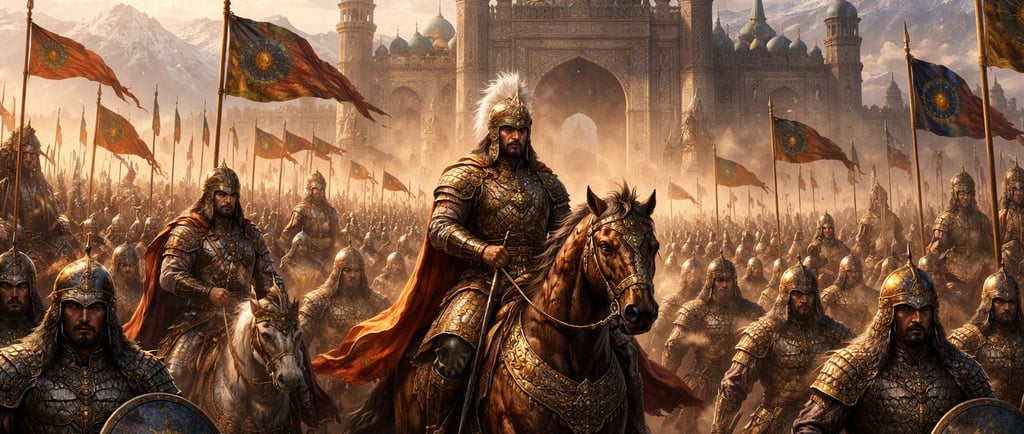
Introduction to the Ilkhanate Dynasty
The Ilkhanate Dynasty emerged in the mid-13th century as a notable successor state of the Mongol Empire, founded by Hulagu Khan, a grandson of Genghis Khan. Established following the sweeping Mongol conquests, the Ilkhanate played a critical role in bridging East and West, influencing not only military conquests but also cultural and economic exchanges across a vast territory that included present-day Iran, Iraq, and parts of Central Asia.
Hulagu Khan initiated the formation of this dynasty in 1256, marking a pivotal moment in history characterized by extensive development in various sectors, including trade, culture, and administration. This was a time when the Mongol Empire was fragmented into several khanates, but the Ilkhanate stood out for its contributions to the formation of a centralized government within the Mongol framework. Notably, the dynasty governed a vast region, overseeing a complex array of societies that had differing religions, languages, and customs.
The significance of the Ilkhanate extends beyond its political achievements; it represents a fusion of Mongol and Persian influences. The adoption of Persian culture and administrative practices helped solidify its governance and facilitated the establishment of a more sophisticated monetary system, which would become a critical aspect of the dynasty's economy. Furthermore, the Ilkhanate was instrumental in the development of trade routes, promoting the famous Silk Road that facilitated the flow of goods, culture, and technology between Europe and Asia.
Overall, the Ilkhanate Dynasty laid the groundwork for significant economic and cultural transformations that would have enduring impacts on the regions it governed. Understanding its rise is essential for grasping the complexities of the monetary systems that evolved under its auspices, which will be explored in further sections of this blog post.
Overview of the Ilkhanate's Monetary System
The Ilkhanate dynasty, a significant state that emerged in the 13th century, demonstrated a sophisticated monetary system that played a crucial role in facilitating trade and economic stability across its dominion. Central to this system were two primary forms of currency: the gold dinar and the silver dirham. The gold dinar represented a high-value medium for substantial transactions, reflecting the wealth and influence of the ruling elite, while the silver dirham served as a more common currency, widely utilized for everyday trade among merchants and the general populace.
The operational mechanisms behind these currencies were carefully designed to promote stability. The production of coinage was overseen rigorously, ensuring that the weights and measures of both the gold dinar and silver dirham were consistent and widely accepted both within and beyond the Ilkhanate’s borders. This consistency not only facilitated trade with neighboring regions but also upheld public confidence in the currency's value. Key figures, such as Abaka Khan and his successors, played pivotal roles in shaping the monetary policy that dictated the minting and circulation of these coins, directly influencing economic interactions.
Under their governance, the Ilkhanate experienced periods of enhanced economic activity, attributed to their effective monetary policies. The leadership ensured that markets were supplied with adequate currency, reducing instances of inflation and fostering a conducive environment for merchants. Furthermore, their strategic relationships with other states allowed for the establishment of a broader network of commerce that was vital for the dissemination of the gold dinar and silver dirham. Hence, the Ilkhanate's monetary system not only facilitated internal trade but also connected them to the vibrant trade routes of the wider world, showcasing the complexities involved in governance and economic management of the era.
Attempt to Introduce Paper Money and Its Failure
In 1294, the Ilkhanate dynasty undertook a significant monetary experiment by introducing paper money, inspired largely by the successful practices established in China. This initiative marked an essential attempt to adapt a more flexible and efficient monetary system in response to the economic challenges faced by the empire at the time. The context surrounding this decision involved a combination of warfare expenditures and the logistical hurdles associated with transporting metal coins across the vast territories of the Ilkhanate.
The characteristics of the proposed paper currency were noteworthy. It aimed to function similarly to a promissory note, with the authorities attempting to assure the populace of its value. However, the design and implementation process of this currency saw many oversights, which contributed significantly to its eventual failure. The government’s inability to instill confidence in the populace regarding the legitimacy of the paper money exacerbated issues related to its acceptance. Public resistance emerged due to skepticism about whether the currency would hold any intrinsic value, as it lacked a stable backing by precious metals.
The fallout from the introduction of paper money was swift and damaging. As the economy continued to experience inflation and devaluation of the currency, widespread unrest ensued. This episode of economic mismanagement revealed the significant challenge the Ilkhanate faced when adapting to innovative monetary practices. Local merchants and the general population resisted the adoption of paper currency, leading to reduced trade and economic activities. Ultimately, the failed experiment with paper money served as a lesson in the complexities of economic reform, highlighting the necessity for public trust and sound governance in maintaining a stable monetary system.
Lessons from the Ilkhanate Dynasty's Monetary Legacy
The Ilkhanate Dynasty, which thrived in the 13th and 14th centuries, provides a compelling case study in the evolution of monetary systems and their lasting impacts. One central lesson from their experience lies in the inherent value of precious metals such as gold and silver as forms of currency. Throughout history, these metals have consistently held their worth due to their scarcity, physical properties, and universal acceptance across diverse cultures. In contrast, fiat currencies—those backed by trust in government rather than physical commodities—bear risks, particularly relating to inflation and a loss of confidence.
The fall of the Ilkhanate’s monetary system highlighted the perils of insufficient backing for currency. When the state minted excessive amounts of coins without adequate reserves of precious metals, trust waned among the populace. This disintegration of faith in the monetary system led to economic instability and ultimately contributed to the dynasty's decline. The parallels with contemporary economies are striking; many nations today grapple with similar dilemmas surrounding monetary policy. The balance between maintaining trust in fiat currency while avoiding rampant inflation remains a critical concern for modern central banks.
Moreover, the Ilkhanate's experience underscores the necessity for sound monetary policy and the importance of public confidence in a currency's value. A successful system is not merely a function of the quantity of money in circulation but also of the perception of its worth. Disruptions in this relationship can lead to economic turmoil. Lastly, studying the patterns from the Ilkhanate's monetary history provides valuable insights into the relationship between currency stability and economic trust, not just for scholars, but also for policymakers who strive to build resilient economies today.