
The Rise and Fall of the Chagatai Khanate: An Insight into Its Monetary System
EDUCATION ON GOLD & SILVER
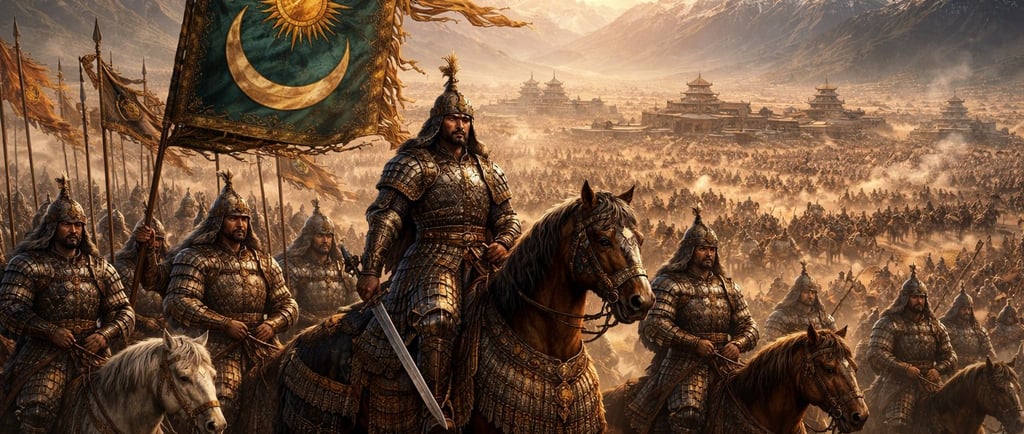
Historical Context and Key Dates (1227-1363)
The Chagatai Khanate, named after Chagatai, the second son of Genghis Khan, emerged following the death of its founder in 1227. This period marked a significant reorganization of the Mongol Empire, which subsequently led to the establishment of various khanates, including the one ruled by Chagatai. The division of the empire was pivotal, as it not only indicated the territorial boundaries but also underscored the political fragmentation that would later influence the socio-economic dynamics within each khanate.
In 1246, Ogedai Khan's influence began to ascend, as he was instrumental in consolidating the empire's forces and resources. His leadership was characterized by extensive military campaigns that fostered territorial expansion across Central Asia, creating a link between the East and West. This dynamic interaction not only facilitated cultural and economic exchanges but also had a profound impact on the monetary system of the Chagatai Khanate, promoting trade and commerce throughout the region.
The period witnessed several noteworthy military conquests, which enabled the khanate to stretch its influence over vast territories that encompassed parts of modern-day China, Mongolia, and Central Asia. The integration of diverse cultures, ideas, and practices greatly transformed the economy of the Chagatai Khanate, making it a crucial hub for trade routes such as the Silk Road.
However, by 1363, the Chagatai Khanate began to experience a decline. Factors contributing to this decline included internal strife, power struggles among potential successors, and external pressures from neighboring states. The eventual fragmentation of the khanate led to a diminished capacity for centralized governance and disrupted trade networks. These changes had notable repercussions on the monetary and economic structures that were once thriving during the height of the khanate's power.
Influential Leaders and Economic Impact
The Chagatai Khanate, a significant division of the Mongol Empire, was shaped markedly by its influential leaders. Chagatai Khan, as the founder, established a foundation that intertwined the Mongolian nomadic traditions with the sedentary agrarian cultures in the region. His leadership emphasized the importance of trade routes, particularly the Silk Road, which facilitated not only commerce but also cultural exchanges. Chagatai Khan’s establishment of a tax system aimed at consolidating wealth was pivotal in promoting economic stability within the newly formed khanate.
Later rulers, such as Kaidu and Tughlugh Temür, played equally significant roles in the economic dynamics of the Chagatai Khanate. Kaidu, known for his fierce independence and military prowess, sought to retain stability through a variety of taxation methods that often alienated local populations. His leadership style was characterized by a combative approach that sometimes hindered trade relations with neighboring states. This often led to periods of instability, which in turn adversely affected the economy, showcasing how leadership styles directly influenced the prosperity or decline of the khanate.
Tughlugh Temür's reign marked a crucial shift in the khanate's policy towards local populations. By fostering better relations with the sedentary communities and promoting Islamic practices alongside Mongol traditions, he was able to revitalize trade and agricultural production. His era saw the establishment of a more structured economic framework, wherein tax revenues were utilized to strengthen infrastructure, enhancing trade movement. Thus, the intertwining of leadership and economic policies in the Chagatai Khanate illustrates the significant impact that influential figures had on the shaping of its monetary system and overall prosperity.
Monetary System: Gold and Silver Usage
The Chagatai Khanate, a dominion that spanned a significant portion of Central Asia, utilized a sophisticated monetary system primarily founded on the usage of precious metals, notably gold and silver. Among the various coins minted during this period, the 'tamgha' and the 'dinar' played crucial roles in the economy of the Khanate. The tamgha was a specific coinage often linked to official sanctioning by the ruling authority, while the dinar was widely recognized across the Islamic world, facilitating trade and commerce.
The proliferation of these coins exemplified the significance of precious metals in enabling economic transactions. Gold and silver coins served not only as a medium of exchange but also reflected the wealth and power of the Chagatai rulers. As trade networks expanded across Asia, from the Silk Road to emerging market cities, the reliability of these tangible assets was vital. Merchants preferred coins of confirmed weight and purity, which added intrinsic value to their dealings. The reliability of the monetary system fostered trust among trading partners, aiding in the smooth flow of commerce that led to the Khanate’s economic prosperity.
In contrast to contemporary fiat currency practices, the Chagatai Khanate's reliance on gold and silver highlighted important lessons regarding monetary stability. The tangible nature of their currency provided a buffer against inflation and economic volatility, as these metals maintain intrinsic value over time. This system underscored the advantages of backing currency with physical assets, as such practices can enhance economic resilience and mitigate the risks associated with unanchored fiat currencies. The deeper examination of this monetary framework reveals not only the intricacies of the Chagatai Khanate’s economy but also its enduring relevance in discussions surrounding monetary policies in modern economies.
Lessons for Modern Investors: The Legacy of Chagatai Currency
The Chagatai Khanate's monetary system significantly shaped economic practices, offering valuable insights for modern investors, particularly those interested in gold and silver investments. Historical analysis reveals that the use of precious metals such as gold and silver has consistently provided a stable store of value across different civilizations and epochs, including during the time of the Chagatai Khanate. Both gold and silver retained intrinsic value, serving as reliable currency despite the fluctuations of surrounding economies.
Investors today can draw parallels between the volatile nature of fiat currencies and the resilience of gold and silver through economic upheaval. The Khanate provided a clear instance where reliance on precious metals contributed to a more resilient economy capable of withstanding periods of instability. As fiat currencies waver due to inflationary pressures or governmental policy changes, the historical precedent set by the Chagatai Khanate emphasizes the importance of precious metals as a safeguard against inflation. This notion is particularly relevant in today's economic landscape, where inflation concerns continue to surface around the globe.
Moreover, the strategic use of currency by the Chagatai highlights the necessity for diversifying one’s investment portfolio. Modern investors can learn from this by integrating gold and silver as hedge assets. Both metals maintain an enduring appeal, and the relationship between them often showcases inverse reactions to economic stress. Diversification not only mitigates risks but positions investors to capitalize on the potential appreciating value of precious metals.
As a result, the legacy left by the Chagatai Khanate remains pertinent for contemporary investors. Embracing these historical lessons can guide investors toward a more stable and resilient portfolio, ultimately enhancing financial security in an unpredictable economic environment.