
The Rise and Fall of the Dzungar Khanate Empire's Monetary System: Lessons for Modern Investors
EDUCATION ON GOLD & SILVER
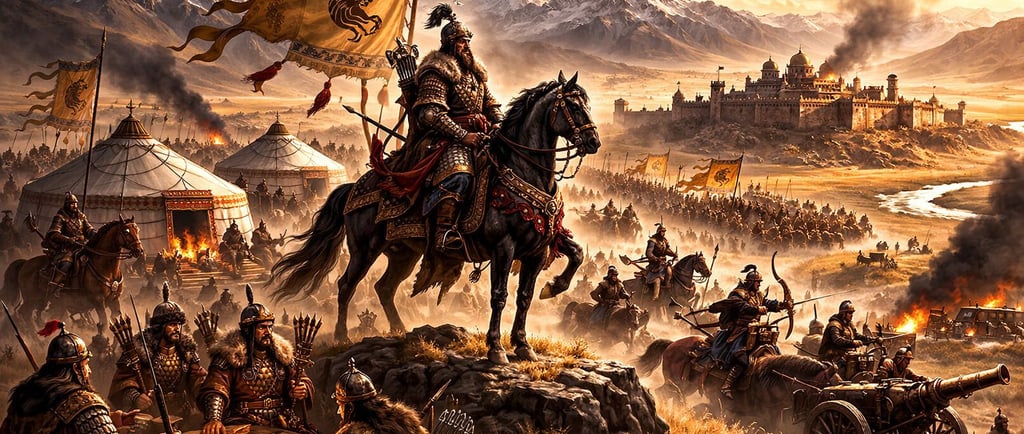
Historical Overview of the Dzungar Khanate Empire (1634 - 1758)
The Dzungar Khanate Empire, established in 1634 by Erdene Tsagaan, marked a significant chapter in the history of Central Asia. This political entity arose from the unification of various Mongolic tribes, primarily driven by the ambition to control trade routes and expand territory. The establishment of the khanate was notable not just for its geopolitical implications but also for its economic strategies that laid the foundation for military and territorial expansion.
During its height, the Dzungar Khanate was led by prominent figures such as Galdan Boshugtu Khan, whose leadership was pivotal in consolidating the empire’s power. Galdan initiated numerous military campaigns that expanded the khanate's domain into modern-day Xinjiang, parts of Mongolia, and regions of Kazakhstan. These conquests were not only instrumental in territorial gains but also significantly influenced the trade dynamics of Central Asia, enhancing the economic base of the empire.
The Dzungar Khanate's economy thrived on its strategic position along the Silk Road. This positioning enabled it to serve as a crucial trading hub where goods ranging from textiles to spices circulated amongst diverse cultures. The economic policies instituted were reflective of the empire's reliance on trade, with a focus on ensuring security along trade routes and fostering relationships with neighboring states.
However, the socio-economic factors contributing to the empire’s decline in 1758 cannot be overlooked. Internal strife, including power struggles and depletion of resources, coupled with external pressures from Qing China, weakened its structural integrity. A series of conflicts culminated in significant territorial losses, marking the gradual disintegration of what was once a formidable empire in Central Asia.
The Monetary System of the Dzungar Khanate
The Dzungar Khanate, which existed in the 17th and 18th centuries, developed a sophisticated monetary system primarily utilizing gold, silver and copper as currency. During its peak, the Khanate primarily used silver and copper coins, which included the yamba and Pul. These coins not only facilitated trade within the Khanate but also with neighboring regions, enhancing the economic framework of the empire.
Trade practices in the Dzungar Khanate were deeply integrated with its monetary system. The use of metals such as gold and silver provided intrinsic value to the currency, which was critical in times of economic stability and growth. The Khanate engaged in extensive trade routes across Central Asia, exchanging goods like furs, textiles, and livestock. This trading activity was supported by a stable and trusted currency system, which ensured that merchants were willing to engage in commerce, thus bolstering the economy.
Resource scarcity, particularly in precious metals, had a profound effect on the economic landscape of the Dzungar Khanate. The Khanate's initial abundance of gold and silver coins eventually faced challenges due to dwindling resources, which led to inflation and a fluctuation in the monetary value. Important dates, such as the Khanate’s peak in the late 17th century and its subsequent decline in the mid-18th century, reveal how critical the monetary system was to its rise and fall.
In comparing the monetary system of the Dzungar Khanate with contemporary empires such as the Qing Dynasty and the Ottoman Empire, substantial differences in coinage, trade mechanisms, and the impact of economic policies reveal insights into why some empires thrived while others faltered. The complexities of the Dzungar Khanate's monetary practices serve as a valuable case study for understanding historical economic systems and provide lessons for modern investors today.
Impact of Leadership on Economic Policies
The monetary system of the Dzungar Khanate was significantly shaped by the leadership styles and economic policies of its rulers, notably Galdan Boshugtu Khan. His reign marks a pivotal moment in the Khanate's economic history, as his decisions regarding trade, taxation, and resource management had far-reaching consequences. Galdan's approach to leadership was characterized by a strong centralization of power, which he utilized to enforce reforms aimed at revitalizing the economy.
Galdan Boshugtu Khan's policies encouraged trade by fostering relationships with neighboring empires and promoting the Silk Road's importance. His strategic initiatives allowed for an increase in commerce, which laid the groundwork for economic growth. By incentivizing merchants and traders through tax breaks and protections, he effectively stimulated trade activities. However, the Khan's focus on extensive taxation imposed on the already strained populace generated discontent among the common people, thereby creating a dual impact on trade and economic stability.
Moreover, his leadership illustrated the delicate balance required in resource management. While initiating expansive campaigns, Galdan often neglected local agricultural practices, undermining the foundations of self-sustainability. This shortsightedness led to resource depletion and weakened the economy, ultimately necessitating reliance on external goods. The interplay between his authoritative leadership and unyielding ambitions reveals the complexities of governance in relation to economic positioning.
In a broader context, the examples set by Galdan Boshugtu Khan underscore the critical influence of leaders on an empire's monetary framework. Strong, enlightened leadership that prioritizes both economic growth and social contract is essential for fostering stability. As modern investors look towards historical lessons, the rise and fall of the Dzungar Khanate’s economic policies emphasize the importance of balanced governance in cultivating a resilient monetary system.
Lessons for Modern Gold and Silver Investors
The Dzungar Khanate provides an insightful case study regarding the management of a monetary system while emphasizing the significant role that gold and silver can play in economic stability. One of the foremost lessons that modern investors can draw from this historical precedent is the importance of backing a currency with tangible resources, such as precious metals. The Dzungar economy suffered from issues related to unbacked currency, leading to loss of value and economic instability. Thus, contemporary investors should consider investing in gold and silver not merely as speculative assets but as essential components of a robust monetary strategy.
Additionally, understanding market cycles is crucial for anyone investing in precious metals. The Dzungar Khanate experienced fluctuating economic fortunes, a reminder that investors must remain attentive to macroeconomic indicators and global trends. Just as the Dzungar leadership had to adapt to changing conditions, modern investors should develop a keen sense for timing their investments based on prevailing economic factors, including inflation rates and geopolitical events that could impact commodity prices.
Political influences also played a significant role in the Dzungar Khanate's economic system. The rise and fall of political power directly affected the stability of their currency. Investors today must remain vigilant of the political landscape, assessing how governance and policy decisions affect the value of gold and silver. A diversified investment strategy, which includes securing physical assets during periods of political instability, can provide a buffer against potential financial turbulence.
In summary, the experiences of the Dzungar Khanate serve as a cautionary reminder for contemporary investors. By learning from the past, investors can make informed decisions, secure their assets, and potentially enhance economic resilience in uncertain times.