
The Rise and Fall of the Empire of Nicaea's Monetary System: Lessons for Modern Investors
EDUCATION ON GOLD & SILVER
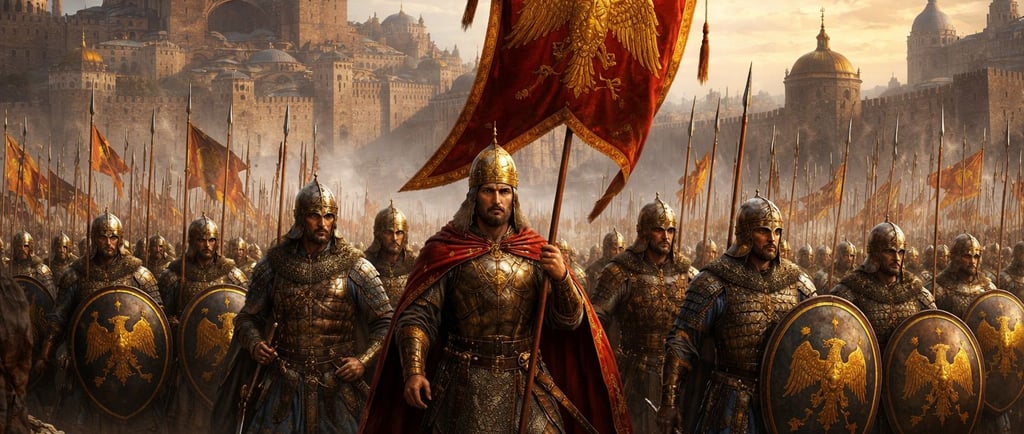

Introduction to the Empire of Nicaea and its Monetary System
The Empire of Nicaea, established in 1204 after the Fourth Crusade, emerged as a critical geopolitical entity following the fragmentation of the Byzantine Empire. Positioned primarily in western Anatolia, Nicaea became the center of Greek Orthodox Christianity and a bastion of Byzantine culture and tradition during a tumultuous period marked by foreign invasions and internal strife. This historical backdrop is essential for understanding the empire's monetary system, which evolved as a response to both economic necessity and cultural influences.
As the Byzantine Empire's power waned, the leaders of Nicaea adopted measures to stabilize their economy and assert their political legitimacy. The monetary system that developed in this era relied predominantly on the use of gold and silver coins. These coins not only facilitated trade but also symbolized the wealth and sovereignty of the empire. The introduction of the hyperpyron and other denominations aimed to standardize currency, providing a unit of exchange that fostered commerce across regions affected by instability.
Significant dates, such as the declaration of the Empire in 1204 and the restoration of Constantinople in 1261, marked crucial transitions in the empire’s fiscal policies. Under the leadership of figures like Emperor Theodore II Laskaris, the administration sought to enhance its financial systems by engaging in trade with Western Europe and leveraging the rich resources of its territory. The empire's monetary practices not only reflected internal developments but also interacted dynamically with the broader economic trends of the Mediterranean world, further influencing local and regional commerce.
The Empire of Nicaea stands as a testament to the complexities of monetary systems shaped by cultural and political shifts during a period of crisis. Understanding this historical monetary framework provides valuable insights into economic resilience, illustrating lessons relevant to modern investors navigating today's financial landscape.
Key Leaders and Economic Policies (1204-1261)
The Empire of Nicaea, emerging in the early 13th century after the Fourth Crusade, was essential in preserving the Byzantine legacy. A significant number of its achievements in economic policies and monetary stability can be attributed to its prominent leaders during this period, particularly Emperor John III Doukas Vatatzes. His reign from 1222 to 1254 marked a pivotal era for the empire's financial resurgence.
Under John III, the Empire of Nicaea experienced a renewed sense of economic stability. His policies were largely focused on enhancing trade and agricultural production, which were critical in rebuilding the war-torn economy. John III implemented a series of reforms that aimed to streamline taxation and regulate market activities. This not only secured revenue for the state but also promoted consumer confidence among the populace, thereby facilitating commerce across the region.
The hyperpyron coin, introduced during John III's reign, emerged as a standard of exchange and played a significant role in the empire’s monetary system. This gold coin was designed to uphold high standards of purity, which helped stabilize the economy and promoted trade both within and outside the empire's borders. The emphasis on a reliable currency was paramount during an era when many states were grappling with inflation and currency devaluation.
Moreover, the rulers of Nicaea recognized the importance of securing trade routes and alliances with neighboring states. By fostering diplomatic relationships, they enabled a more robust economic framework that encouraged merchants to engage in long-distance trade. These strategic partnerships contributed significantly to the empire's economic vitality, allowing it to flourish despite ongoing pressures from rival powers.
The Decline of the Empire's Monetary System (1261-1331)
The Empire of Nicaea, after its restoration in 1261, faced a series of challenges that significantly undermined its monetary system. One of the primary factors contributing to the decline was the external pressure exerted by rival states. As the Byzantine Empire attempted to reestablish its prominence, neighboring territories such as the Latin Empire and the expanding Ottoman forces posed continuous threats. Their military endeavors often disrupted trade routes, leading to economic instability that directly impacted the empire's monetary operations.
Additionally, internal strife played a crucial role. The political landscape during this period was fraught with factional discord and power struggles among the nobility. This infighting not only weakened governance but also created an environment rife with corruption and mismanagement. The rulers of Nicaea often failed to implement cohesive economic policies, leading to hoarding of wealth by the elite instead of fostering a stable currency for the masses. This adversely affected public trust in the monetary system.
Moreover, mismanagement of resources aggravated the financial instability. The Empire of Nicaea's monetary system relied heavily on a fixed silver standard. However, excessive debasement of currency in attempts to pay off debts and fund military campaigns diluted the value of the coinage. Such practices fueled inflation and contributed to a declining economy, wherein the purchasing power of the populace significantly diminished.
In conclusion, the combination of external military pressures, internal political conflicts, and economic mismanagement created a perfect storm that ultimately led to the decline of the Empire of Nicaea’s monetary system. As the empire succumbed to Ottoman control in 1331, these historical lessons serve as a cautionary tale for modern investors, highlighting the importance of sound financial governance and external diplomatic relations in sustaining a robust economic framework.
Lessons from Nicaea's Monetary History for Modern Investors
The Empire of Nicaea, established in the aftermath of the Fourth Crusade, provides pertinent insights into the usage of precious metals like gold and silver in shaping monetary stability during uncertain times. The empire's monetary system heavily leveraged the hyperpyron, a gold coin that became a symbol of reliability and trust. Investors today can draw crucial lessons from this historical context as they contemplate their own investment strategies, particularly regarding precious metals.
Firstly, the hyperpyron exemplifies the timeless appeal of gold as an asset that retains its value even amidst economic turmoil. As contemporary investors face market fluctuations, geopolitical tensions, and inflationary pressures, the stability offered by gold remains relevant. Historically, gold has been chosen as a safeguard against the devaluation of currency, and its emergence as a reliable store of wealth during Nicaea’s reign serves as a reminder of its enduring worth.
Moreover, the practices of the Empire of Nicaea underline the significance of diversification. While gold and silver function as principal investment vehicles, Nicaea also demonstrated the need for a balanced approach that integrates other forms of assets. Investors today should, therefore, consider not only precious metals but also stocks, IRAs, and real estate within their portfolios to mitigate risks and optimize returns.
Additionally, the careful management of currency supply during Nicaea’s prosperity highlights the crucial role of monetary policy in maintaining economic health. Just as the hyperpyron was thoughtfully introduced to stabilize the empire's economy, modern investors must be aware of monetary trends and government policies that influence the market. By understanding historical monetary principles, investors can better anticipate future market behaviors.
In conclusion, the financial practices of the Empire of Nicaea provide valuable lessons for contemporary investors. By acknowledging the enduring value of precious metals, embracing diversification, and paying attention to monetary policy, modern investors can navigate economic uncertainties with greater confidence. The historical journey of Nicaea’s monetary system serves as a foundation upon which to build a resilient investment strategy in today’s volatile landscape.