
The Rise and Fall of the Serbian Empire's Monetary System: Lessons for Modern Investors
EDUCATION ON GOLD & SILVER
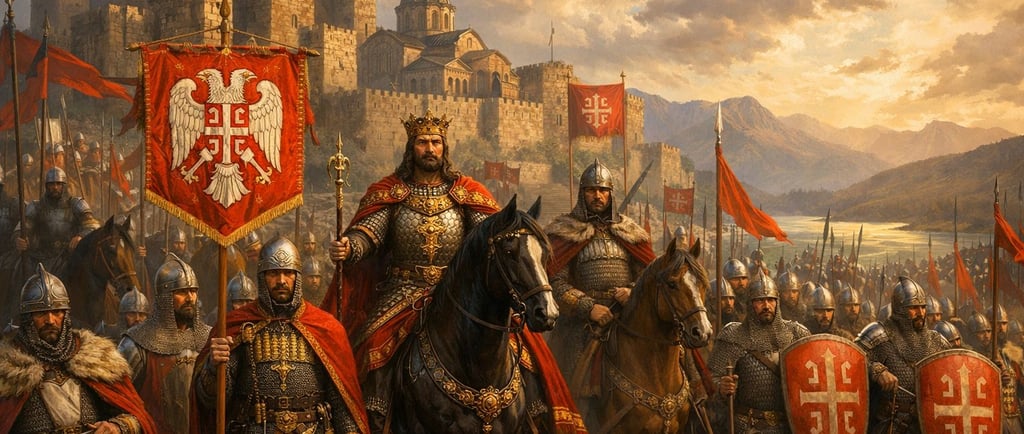
Historical Context: The Serbian Empire (1346-1371)
The Serbian Empire emerged as a significant political and cultural force in Southeast Europe during the mid-14th century. Its establishment in 1346 marked a pivotal moment in Serbian history, driven by the vision and ambition of its ruler, Stephen Dušan, who was proclaimed Emperor during a coronation ceremony that year. Dušan's reign was characterized by military conquests and territorial expansion, which solidified the empire's influence and laid the groundwork for a burgeoning economy.
At the time, the socio-political landscape of the region was complex, entangled with ongoing conflicts and shifting alliances among neighboring states. The Byzantine Empire's decline created a power vacuum which Dušan skillfully exploited. His military prowess led to notable victories against both the Byzantines and other regional entities, significantly expanding the borders of the Serbian Empire. Such military success contributed to the empire's ability to accumulate wealth, primarily through the acquisition of valuable resources like gold and silver.
Besides military achievements, Stephen Dušan was instrumental in promoting internal reforms. He implemented administrative changes that enhanced governance across the empire, fostering a sense of unity and national identity among the Serbian people. Under his rule, the establishment of legal codes, particularly the Dušan's Code, illustrated an early move towards organized governance and economic stability.
Dušan's reign did not last indefinitely; however, the period from 1346 to 1371 set the stage for socio-economic development within the empire. By cultivating strong trade links and emphasizing resource management, the Serbian Empire emerged as an economic powerhouse in the Balkans. Ultimately, this historical context is crucial for understanding the evolution of monetary systems in empires and their relevance to modern investors today.
The Monetary Practices of the Serbian Empire
The Serbian Empire, during its zenith in the late 14th and early 15th centuries, implemented a monetary system that was significantly influenced by its reliance on precious metals, particularly gold and silver coinage. The administrative practices around minting and managing these coins were critical to the empire's economy and trade relations, creating a framework that facilitated both domestic and international exchanges.
Gold coins, known as ducats, were especially valued, and their usage symbolized not only wealth but also the authority of the ruling monarchs. The issuance of coinage was often a response to shifting political landscapes, with new coins minted as symbols of power during the reigns of prominent rulers. For instance, significant changes to monetary policies occurred after major territorial expansions, which necessitated adaptations to the circulating currency to ensure stability and acceptance within newly acquired regions.
Trade played a vital role in sustaining the economic practices of the Serbian Empire. The empire was strategically located along major trade routes, allowing for the exchange of goods between the East and West. Agricultural production provided further support to the monetary system, as surplus crops could be traded for coins, reinforcing the value of currency in everyday transactions. External trade agreements also influenced monetary practices; for example, alliances with neighboring states often led to standardized coinage that facilitated smoother trade.
Moreover, the monetary values were susceptible to fluctuations caused by conflicts. Wars instigated changes in the supply and demand for currency, especially if conflict disrupted agricultural production or trade routes. As territories were conquered or lost, the empire's economic stability would hinge on how effectively it managed its currency in the face of such adversities. The legacy of these ancient practices offers modern investors critical insights into how monetary systems can be influenced by both internal governance and external pressures.
Key Leaders and their Impact on the Economy
The Serbian Empire witnessed a series of transformative leaders, each playing a crucial role in shaping its economic landscape. One of the most notable figures was Stephen Dušan, who reigned from 1331 to 1355. His policies significantly influenced the empire's monetary system, particularly through the establishment of a more centralized taxation system. Dušan recognized the importance of a robust fiscal structure to fund military campaigns and maintain national sovereignty. By implementing taxes on trade and land, he effectively increased state revenues, allowing for the expansion of the army, which was pivotal in asserting Serbia's power in the region.
Following Dušan's reign, his successors continued his legacy, albeit with varying degrees of success. The decline of centralized control often led to economic instability, particularly during periods of military conflict with the Ottomans and internal strife. For instance, the costly wars and military expenditures strained Serbia’s resources, often leading to increased taxation on the common populace, negatively affecting their livelihood. Diplomatically, Serbia’s relations with neighboring states, including alliances and conflicts, directly influenced trade routes and economic exchanges. Economic isolation often followed military defeats, diminishing the monetary system's strength.
The influence of the Byzantine Empire also cannot be overlooked. During the early years, Byzantine trade practices and economic systems shaped Serbian monetary policies. However, as the Ottoman threat grew, the balance shifted, leading to an increase in conflict and disruption of trade. Key dates mark these shifts in leadership and their economic ramifications. Notably, Dušan's crowning as the Emperor in 1346 heralded a peak in Serbian economic influence, while the subsequent fragmentation of leadership in the late 14th century led to economic decline. Understanding the impacts of these leaders provides vital lessons for modern investors, emphasizing the interplay between governance, economic policy, and external relations.
Lessons for Modern Gold and Silver Investors
The historical context of the Serbian Empire's monetary system offers numerous valuable insights for contemporary investors, particularly in gold and silver. The rise and fall of this empire illustrate essential lessons regarding economic stability, preservation of wealth, and the strategic role of precious metals in an investment portfolio.
Primarily, the importance of stability cannot be overstated. The declining value of the Serbian dinar due to various socio-economic factors serves as a reminder that currency instability can erode purchasing power swiftly. Modern investors should prioritize assets that inherently retain value over time, such as gold and silver. These precious metals have historically acted as safe havens during economic turmoil, suggesting that diversification into physical assets may offer protection against inflation and currency fluctuations.
Additionally, the Serbian Empire's experience emphasizes the significance of understanding market dynamics. Investors today must remain vigilant and adaptive in their approaches, reflective of how the empire lost trust in its currency due to overexploitation and lack of supporting economic fundamentals. By learning from these precedents, investors can better navigate the complexities of modern markets, making informed decisions that consider both current conditions and historical trends.
Moreover, safeguarding wealth has become paramount in today's uncertain economic climate. The fall of the Serbian Empire illustrates the perils of relying exclusively on fiat currencies. As global economies face potential downturns, having a portion of one’s portfolio allocated to tangible assets like gold and silver can provide security. This strategic investment not only helps in preserving capital but also promotes long-term growth amid volatility.
In essence, the lessons from the Serbian Empire's monetary history highlight the practicality of gold and silver investments for modern investors who seek stability, value retention, and resilience against economic adversities.