
The Rise and Fall of the Ghurid Empire's Monetary System: Lessons for Modern Gold and Silver Investors
EDUCATION ON GOLD & SILVER

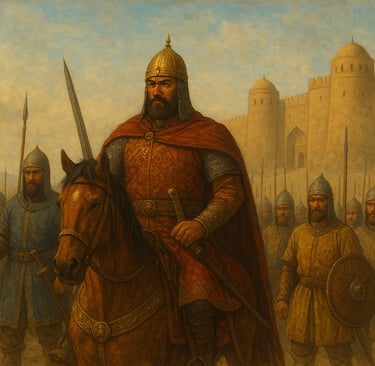
Historical Overview of the Ghurid Empire
The Ghurid Empire, originating in the late 9th century, emerged as a significant power in the region of present-day Afghanistan and northern India. The foundations of this dynasty were established in 879 AD when the Ghurids, originally a group of mountain tribes, consolidated their rule and began to expand their territory. This expansion was facilitated by strategic military conquests and alliances, propelling the Ghurids into the realms of prominence within the Islamic world.
Under the leadership of notable figures such as Ala ud-Din Husain, the Ghurid Empire saw significant territorial expansion from the late 10th century through the early 12th century. Husain’s military campaigns were particularly decisive, allowing the empire to incorporate vast regions of northern India, including the rich and diverse economic hubs of Delhi and Lahore. The Ghurid capital city of Ghazni became a center of culture, trade, and governance, significantly impacting the region's economic landscape through its burgeoning monetary system.
The prosperity of the empire reached its zenith in the 12th century; however, the Ghurids faced numerous challenges that ultimately led to their decline. The arrival of the Mongol forces in the early 13th century marked a pivotal point in Ghurid history. The Mongol invasions decimated the Ghurid army and led to the loss of key territories, culminating in the disintegration of the empire's structure and authority by the mid-13th century. Throughout its existence, the Ghurid Empire played a vital role in the interplay of culture, economics, and military prowess in Central Asia, establishing a legacy that continues to offer lessons in governance and financial systems for modern investors in precious metals like gold and silver.
Monetary Innovations and Key Economic Policies
The Ghurid Empire, which flourished between the 12th and 13th centuries, showcased significant monetary innovations that played a crucial role in its economic development. Central to these innovations was the introduction of gold and silver coinage. The Ghurid rulers, particularly Ala ud-Din Husain and his successors, understood the importance of establishing a stable currency system to facilitate trade and strengthen the empire's influence across the region. They implemented a series of reforms, leading to the proliferation of gold and silver coins that were widely accepted.
One of the pivotal economic policies involved the establishment of mints in key urban centers, which were crucial for producing standardized currency. This not only ensured a uniform value for coins but also fostered trust among traders and merchants, underpinning economic transactions. Mints became vital in controlling the quality of currency, enabling the Ghurid rulers to manage the economy effectively. The standardized currency system helped facilitate commerce across the extensive trade routes that the empire occupied, connecting markets from Central Asia to the Indian subcontinent.
Trade routes significantly impacted the Ghurid economy, enabling the exchange of goods and ideas that further enriched their monetary system. The Silk Road, in particular, played a pivotal role in the transfer of wealth and precious metals, allowing the Ghurids to maintain a stable reserve of gold and silver. This abundance of precious metals not only supported the production of high-quality coins but also contributed to a robust economic ecosystem.
However, while these innovations laid the groundwork for prosperity, they also presented challenges. The reliance on precious metals meant that fluctuations in supply could destabilize the economy. Moreover, the competition with neighboring powers over trade routes often led to conflicts that threatened the stability of the Ghurid monetary system. Nevertheless, the principles guiding the use of currency during the Ghurid Empire hold valuable lessons for modern gold and silver investors, illustrating the complexities and potentials of a precious metal-based economy.
The Decline of the Ghurid Monetary System
The decline of the Ghurid monetary system can be attributed to a confluence of internal and external factors that ultimately led to the empire's fragmentation. One significant element was the internal strife that plagued the Ghurid dynasty. The empire, once unified under strong leaders, began to experience a power struggle that weakened centralized control. Factional disputes, succession crises, and infighting among the ruling elite diverted attention away from economic stability and governance, leading to a loss of credibility in their monetary system.
Another critical external pressure stemmed from the Mongol invasions in the 13th century. The Ghurids found themselves unable to withstand the fierce military campaigns led by Genghis Khan and his successors. These invasions caused widespread devastation, rampant insecurity, and a breakdown of established trade networks. With the disruption of these economic lifelines, trade in gold and silver, crucial to the Ghurid monetary framework, began to dwindle. This erosion not only affected the liquidity and value of their currency but also instigated widespread economic instability.
Simultaneously, shifts in trade routes played a pivotal role in hastening the decline of the monetary system. As merchants sought safer and more profitable avenues for trade, the centrality of Ghurid territory diminished. Notably, the emergent trade routes diverted commerce towards new hubs, which marginalized the Ghurid territories. This shift aggravatingly led to a further decrease in revenue, compounding financial issues and limiting the capacity to project military strength or maintain civil order.
Inadequate resource management became evident during this period, as inflation surged due to rampant coinage without corresponding economic backing. The empire's leadership failed to adapt to the evolving economic landscape, thus paving the way for its gradual disintegration. Key events during the late 12th and early 13th centuries marked the transition of power across regions, ultimately culminating in the decline of the Ghurid Empire and the collapse of a once-thriving monetary system.
Lessons for Modern Investors: Gold and Silver Insights from the Ghurid Empire
The Ghurid Empire, which thrived from the late 10th to the early 13th century, provides a compelling case study for modern investors, especially in the realms of gold and silver. As historical currencies, these precious metals have consistently demonstrated their role as stable forms of value. The Ghurids established a monetary system that utilized gold and silver coins, which not only facilitated trade but also served as a hedge against economic fluctuations. Despite periods of economic instability, these metals retained their intrinsic value, offering lessons that resonate with today’s investors.
Modern investors can glean significant insights from the Ghurid approach to precious metals. In an age where currency values can be volatile, the historically stable nature of gold and silver positions these assets as crucial components of a diversified investment portfolio. By examining the patterns and practicalities of the Ghurid monetary system, investors can better understand how fluctuations in the marketplace often lead to renewed interest in these enduring commodities.
Moreover, the evolution of the Ghurid Empire underscores the necessity of adaptability. Just as the Ghurids adjusted their practices in response to changing economic conditions, contemporary investors must remain vigilant and responsive to market dynamics. Awareness of the factors influencing gold and silver pricing, such as geopolitical tensions, inflation, and shifts in investor sentiment, can empower modern investors to make informed decisions.
Ultimately, the Ghurid Empire helps illuminate the importance of foresight in investment strategies. By recognizing the historical significance of gold and silver, modern investors can appreciate these metals not merely as assets but as vital components of a resilient financial framework. In conclusion, leveraging the lessons learned from this historical empire may guide today’s investors in navigating the complexities of the gold and silver markets successfully.